Sports
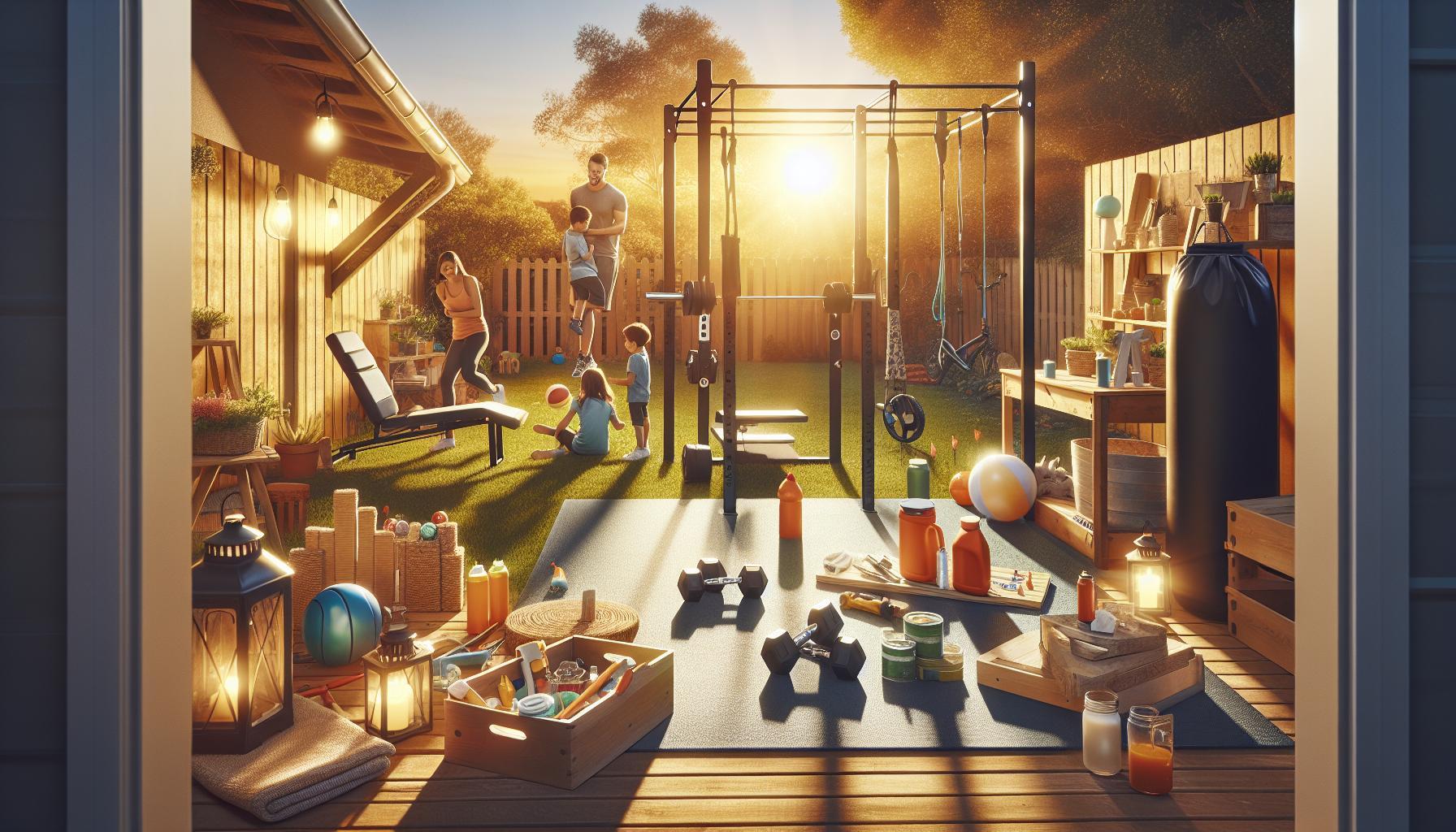
Backyard Sports encompass dedicated residential athletic surfaces, training fixtures, and sports equipment—including basketball half-courts, climbing ropes, fitness rigs, and agility zones—configured for home skill conditioning and athletic recreation.
Foundational Guides & Core Pillars
Dimensions of a Backyard Basketball Court: Plan the Perfect Space
Full versus half-court key dimensions, 3-point arc radiuses, and boundary clearances for residential installations.
Basketball Court Cost: What to Expect for Your Backyard Build
Excavation, post-tensioned concrete slabs, court tiles, in-ground hoops, and line striping cost breakdowns.
How to Hang a Climbing Rope Outside: Secure and Fun Installations
Overhead beam attachment, steel swivel eyes, weather-resistant rope materials, and crash pad safety.
Lat Exercises: Backyard Workouts for a Stronger You
Calisthenics strength conditioning, pull-up bar mechanics, and bodyweight training in backyard fitness gyms.
Backyard Athletic Infrastructure: Slab Sub-Bases, Cushioning & Orientation
Building a durable residential sports installation requires careful integration of civil earthwork, drainage gradients, and athletic surface mechanics. For basketball half-courts, the foundation requires a 4-inch steel-reinforced concrete pad (3,000 PSI minimum) poured over a 4-inch compacted gravel base. To prevent puddle formation while maintaining predictable ball bounce, the slab must be sloped with a uniform 1% gradient (1 inch of drop per 10 feet of run) angled toward yard drainage swales.
Court orientation is an essential architectural consideration: courts should ideally be aligned on a North-to-South longitudinal axis. This prevents athletes from shooting directly into the low morning or late afternoon sun glare. Surfacing with interlocking high-impact polypropylene modular sport tiles reduces joint impact and lower-back strain by absorbing vertical shock up to 35% compared to raw concrete, while built-in perforations allow immediate rainwater drainage.
| Sports Installation | Recommended Footprint | Foundation / Sub-Base | Safety Zone Perimeter |
|---|---|---|---|
| Half-Court Basketball | 30 ft x 30 ft (or 42×50 ft) | 4-inch post-tensioned concrete slab | 5 feet clear buffer around all boundary lines |
| Free-Throw Key Only | 15 ft x 20 ft compact pad | Reinforced concrete over crushed rock | 3 feet side clearance; 4 feet behind backboard |
| Calisthenics Fitness Rig | 12 ft x 16 ft footprint | 6×6 wood posts set in 36-in concrete | 6 feet fall radius with 6 inches rubber mulch |
| Climbing Rope Station | 8 ft x 8 ft ground area | Overhead crossbeam (rated 1,500+ lbs) | High-density 8-inch gymnastic crash pad below |
Thematic Directory & Key Resources
Backyard Basketball Court Design
Outdoor Fitness & Conditioning
Frequently Asked Questions
What is the minimum size needed for a backyard basketball court?
A functional shooting key requires at least 15×20 feet, while a comfortable high-school half-court requires 30×30 feet. Regulation high school half-courts measure 42×50 feet.
Are interlocking plastic sport tiles worth the investment over concrete?
Yes; modular polypropylene athletic tiles provide superior traction when damp, reduce joint wear through engineered lateral forgiveness, and cover unsightly concrete hair cracks.
How deep should the concrete footing be for an in-ground basketball hoop?
Standard heavy-duty in-ground basketball hoops require a concrete anchor footing measuring at least 16 to 24 inches wide and 36 to 48 inches deep (extending below the local frost line).